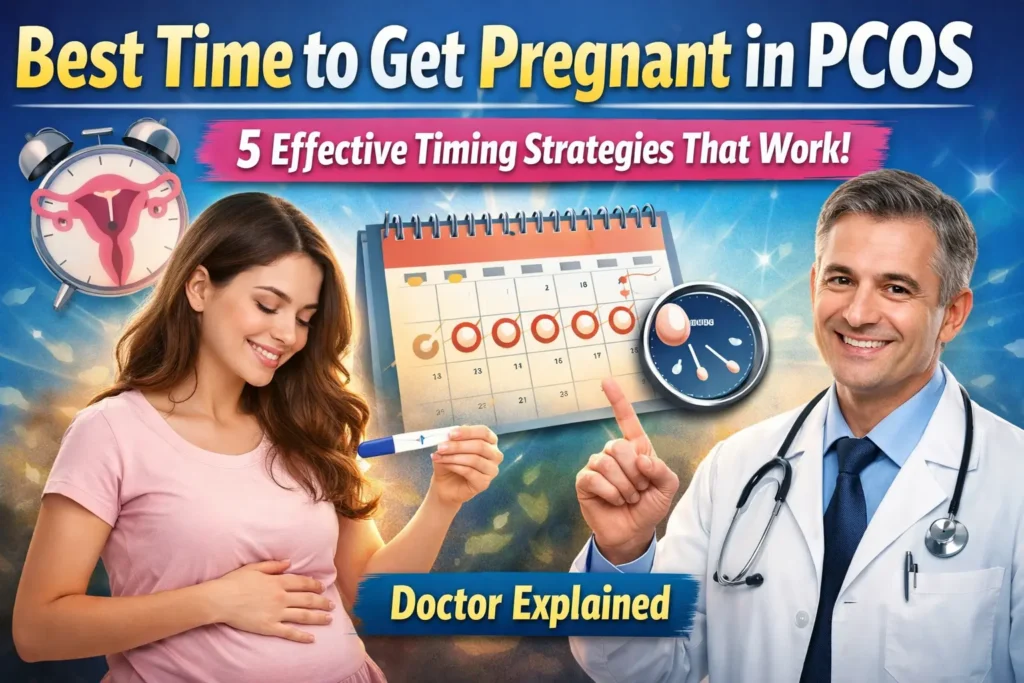
Best Time to Get Pregnant in PCOS explained with simple timing strategies, body science, and practical tips to improve natural conception chances.
If you are struggling with irregular periods or delayed ovulation, you might be wondering about the Best Time to Get Pregnant in PCOS. In my analysis, this is one of the most common and confusing questions women face when dealing with hormonal imbalance.
I have observed that many women assume pregnancy is not possible with PCOS, which is not true. The reality is that timing becomes slightly more complex, but not impossible. Understanding your body’s cycle, ovulation pattern, and fertile window can significantly improve your chances.
In simple terms, the best time to get pregnant in PCOS is when ovulation actually occurs, even if it is irregular. The key is identifying that window correctly.
Key Takeaways
- The Best Time to Get Pregnant in PCOS depends on tracking ovulation, not fixed cycle days
- Ovulation may be delayed but still possible in many women with PCOS
- Lifestyle factors like weight, stress, and sleep can influence fertility timing
- Tracking body signals can improve chances of identifying the fertile window
- Early awareness and consistency often lead to better outcomes over time
Common Causes Of Infertility in PCOS
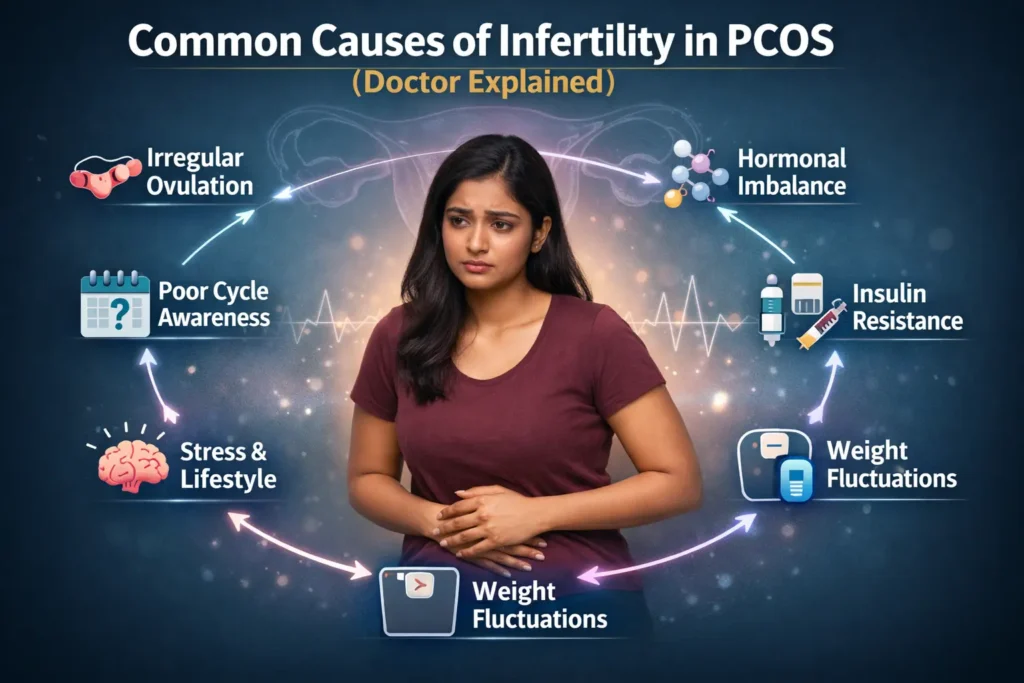
Irregular Ovulation
In my experience, irregular ovulation is one of the biggest challenges in PCOS. The ovaries may not release eggs consistently, which makes predicting fertile days difficult. This irregular pattern often leads to confusion about the best time for conception.
Women may experience cycles that vary in length, sometimes skipping ovulation entirely. However, ovulation can still occur unpredictably, which means pregnancy is still possible with proper timing awareness.
Hormonal Imbalance
I have observed that PCOS is strongly associated with hormonal imbalance, particularly increased androgen levels. These hormones can interfere with normal ovulation patterns.
This imbalance may delay or prevent egg release, making it harder to identify the fertile window. However, balancing lifestyle factors may help regulate these hormones over time.
Insulin Resistance
In my analysis, insulin resistance is commonly seen in PCOS and can affect ovulation indirectly. When the body struggles to manage insulin properly, it may disrupt hormone balance.
This can lead to irregular cycles and difficulty predicting the best time to get pregnant. Managing diet and physical activity may improve this condition gradually.
Weight Fluctuations
I have observed that both weight gain and weight loss can impact fertility in PCOS. Excess weight may worsen hormonal imbalance, while extreme dieting may disrupt ovulation.
Maintaining a stable and healthy weight can support regular ovulation and improve chances of conception.
Stress and Lifestyle
Chronic stress can affect hormone levels and ovulation patterns. In my experience, stress often goes unnoticed but plays a major role in fertility.
Poor sleep, lack of physical activity, and unhealthy routines may further worsen the condition.
Poor Cycle Awareness
Many women rely on calendar-based tracking, which may not work in PCOS. I have observed that this leads to missed fertile windows.
Understanding body signals instead of fixed dates is crucial for improving timing accuracy.
Medical Causes
Anovulation
In some cases, ovulation may not occur at all. This condition is known as anovulation. Women may still experience periods, but no egg is released.
Symptoms may include irregular cycles, missed periods, or difficulty conceiving over time. Identifying ovulation becomes essential in such cases.
Polycystic Ovaries
The ovaries may contain multiple small follicles that do not mature properly. I have observed that this can prevent egg release.
Symptoms may include irregular periods, acne, and hair growth changes. This condition is commonly associated with PCOS.
Elevated Androgen Levels
Higher androgen levels can interfere with egg development and release. This may delay ovulation or make it unpredictable.
Symptoms may include acne, oily skin, and unwanted hair growth.
Thyroid Imbalance
In my analysis, thyroid disorders can also affect menstrual cycles and ovulation.
Symptoms may include fatigue, weight changes, and irregular periods. This condition can further complicate fertility timing.
Prolactin Imbalance
Elevated prolactin levels may suppress ovulation in some women.
Symptoms may include irregular periods and difficulty conceiving.
Endometrial Changes
Irregular cycles may affect the uterine lining, which plays a role in implantation.
This may reduce the chances of successful pregnancy even if ovulation occurs.
When to Worry In PCOS
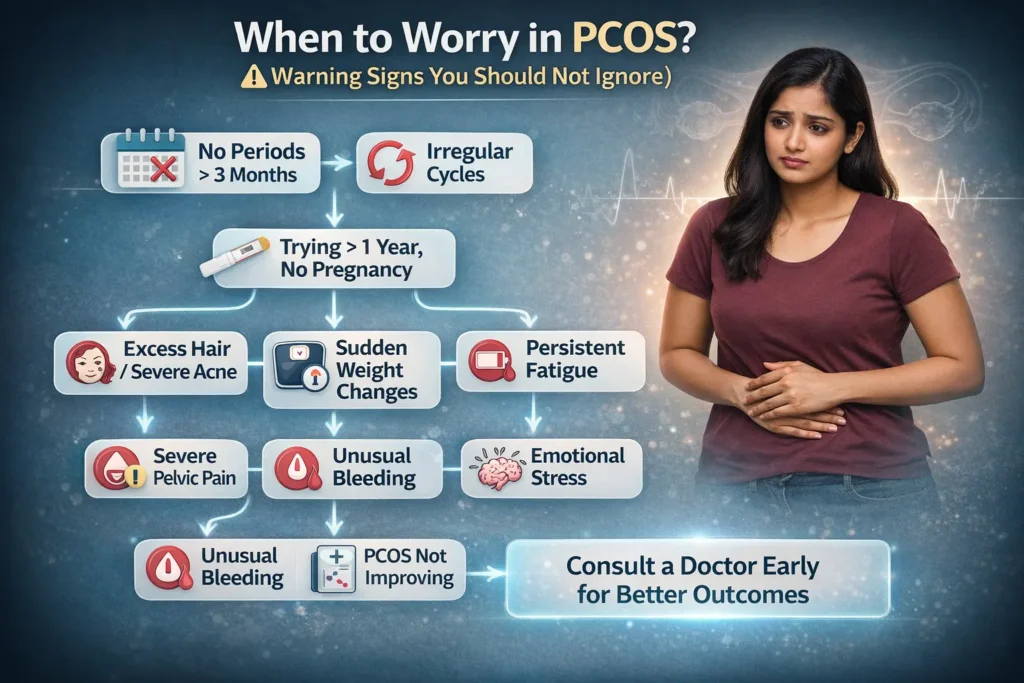
You should consider consulting a doctor if you notice:
- No periods for more than 3 months
- Very irregular menstrual cycles
- Difficulty conceiving after trying for 1 year
- Excessive hair growth or severe acne
- Sudden weight gain or unexplained weight changes
- Persistent fatigue or weakness
- Severe pelvic pain
- Unusual bleeding patterns
- Emotional stress affecting daily life
- Known diagnosis of PCOS with no improvement
In my experience, early consultation can help identify underlying issues and improve outcomes.
7 Alarming Symptoms of PCOS in Teenage Girl (Parents Often Ignore)
How to Fix / Prevention
Track Ovulation Smartly
Instead of relying on dates, focus on body signs like:
- Changes in cervical mucus
- Mild pelvic discomfort
- Slight rise in body temperature
I have observed that this method works better for irregular cycles.
Maintain Healthy Weight
Balanced nutrition and regular activity may improve hormone balance. Even small changes can make a difference.
Manage Stress
Relaxation techniques like meditation, walking, or hobbies may support hormonal health.
Improve Sleep Quality
Consistent sleep patterns can positively impact hormone regulation.
Stay Physically Active
Regular exercise may improve insulin sensitivity and support ovulation.
What Medical Options Are Available Worldwide
In my analysis, different medical approaches may be available globally to support fertility in PCOS. These may include:
- Ovulation monitoring techniques
- Hormonal evaluation
- Lifestyle-based fertility programs
- Assisted reproductive techniques like IVF
- Counseling and fertility guidance
These options vary based on individual needs and should always be discussed with a qualified healthcare professional.
Can You Get Pregnant Naturally If You Have PCOS? 7 Effective Tips (2026 Doctor Explained Guide)
FAQ (Most Searched Questions)
What is the best time to get pregnant in PCOS?
The best time is during ovulation, which may not follow a regular cycle. Tracking body signs can help identify this window.
Can women with PCOS get pregnant naturally?
Yes, many women with PCOS can conceive naturally, especially with proper timing and lifestyle adjustments.
How do I know if I am ovulating with PCOS?
You can track ovulation through body signals, cycle patterns, or professional monitoring if needed.
Does irregular period mean no pregnancy?
No, irregular periods do not mean infertility. Ovulation may still occur unpredictably.
How long does it take to conceive with PCOS?
It varies. Some may conceive quickly, while others may take longer depending on individual factors.
Authority Statistics
According to global health data:
- The World Health Organization states that PCOS affects approximately 8–13% of women of reproductive age worldwide
- Nearly 70% of women with PCOS remain undiagnosed globally
- Infertility affects around 1 in 6 people worldwide, and PCOS is a common contributing factor
These statistics highlight the importance of awareness and early understanding.
Final Note
In my experience, understanding your body is the most powerful step toward improving fertility. The Best Time to Get Pregnant in PCOS is not fixed—it depends on recognizing your unique cycle.
With awareness, patience, and consistency, many women successfully conceive despite PCOS. The key is not perfection, but persistence and informed decision-making.
Referance Link
1. CDC
🔗 Link: https://www.cdc.gov/diabetes/basics/pcos.htm
2. NHS
🔗 https://www.nhs.uk/conditions/polycystic-ovary-syndrome-pcos/
3. Office on Women’s Health
🔗 https://www.womenshealth.gov/a-z-topics/polycystic-ovary-syndrome