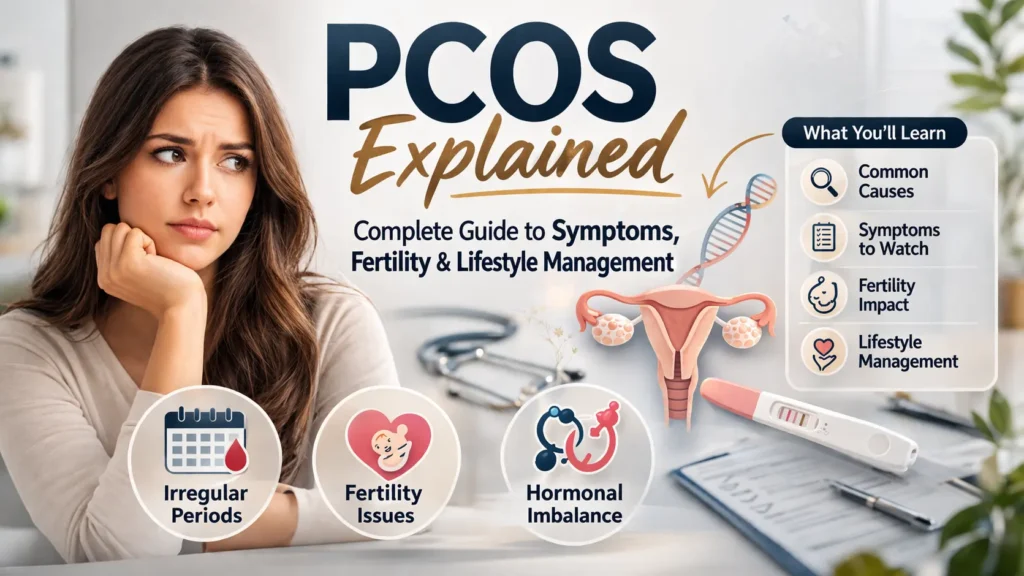
In my analysis of PCOS, I explain what PCOS is, common symptoms, causes, fertility impacts, and practical lifestyle management steps you can take. This comprehensive PCOS guide offers reassurance and real insight for women navigating this condition, And yes your are at right place.
In my clinical experience, Polycystic Ovary Syndrome (PCOS) is one of the most misunderstood conditions affecting up to one in ten women of reproductive age globally. Many women may have subtle early signs that go unrecognized for years. In this article, I break down what PCOS really is — in calm, reassuring language — so you can understand the science behind it, common symptoms to watch for, and practical ways to manage daily life with PCOS.
PCOS is associated with hormonal imbalance, irregular cycles, and changes in fertility. While there’s no universal cure, evidence shows that supportive lifestyle steps may often help improve well‑being and quality of life. Throughout this piece, I use clear explanations and avoid fear‑based claims so you feel informed and empowered.
Key Takeaways
• PCOS is a common hormonal disorder affecting 10–13% of reproductive‑aged women worldwide.
• Symptoms vary widely and may include menstrual irregularities, excess hair growth, acne, insulin resistance, and fertility challenges.
• Causes of PCOS are not fully known, but genetics, insulin resistance, and inflammation often play a role.
• Lifestyle strategies such as balanced nutrition, reducing stress, and regular activity can often support symptom management.
• Early recognition and supportive care may improve long‑term physical and emotional health outcomes.
-
PCOS Explained: Complete Guide to Symptoms, Fertility, and Lifestyle Management(2026)
In my analysis of PCOS, I explain what PCOS is, common symptoms, causes, fertility impacts, and practical lifestyle management steps […]
-
Best Time to Get Pregnant in PCOS: 5 Effective Timing Strategies That Work (Doctor Explained)
Best Time to Get Pregnant in PCOS explained with simple timing strategies, body science, and practical tips to improve natural […]
-
7 Alarming Symptoms of PCOS in Teenage Girl (Parents Often Ignore) | Doctor Explained
Symptoms of PCOS in teenage girl explained in simple language. Learn 7 early warning signs, causes, and what parents should […]
What Is PCOS?
In my observation, PCOS (which stands for Polycystic Ovary Syndrome) is a condition linked with hormonal imbalance that often affects people with ovaries during their reproductive years. Rather than one single problem, PCOS involves a complex interplay between reproductive hormones like estrogen, progesterone, and male‑type hormones called androgens.
Although the exact cause is not fully understood, research shows that hormonal signaling differences can lead to features such as irregular ovulation, changes in menstrual cycles, and alterations in metabolism. PCOS may also run in families, suggesting genetic influences, but environmental and lifestyle factors are involved too
Common Causes of PCOS
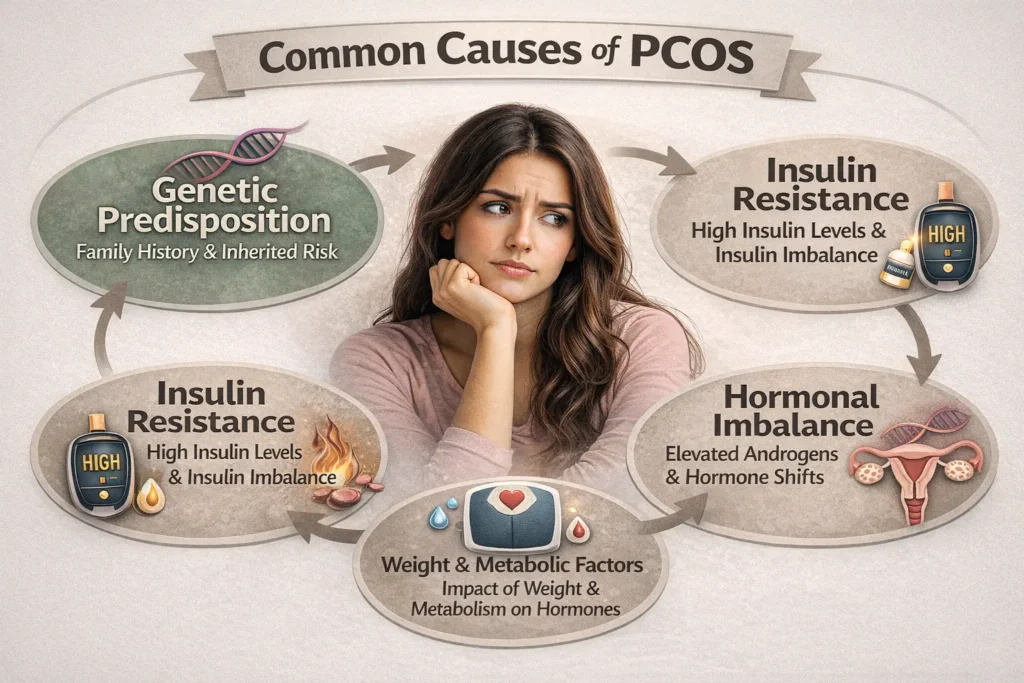
In my clinical practice and review of evidence, I have observed that PCOS does not arise from a single root cause. Instead, several factors often interact over time. These include:
1. Genetic Predisposition
Women who have family members with PCOS often have a higher chance of developing it themselves. Though no single gene is responsible, multiple gene variations appear to contribute to susceptibility. This suggests PCOS often “runs in families,” but not everyone with family history will get it
2. Insulin Resistance
Insulin resistance — where the body’s cells respond less efficiently to insulin — often shows up in women with PCOS. When insulin levels rise to compensate, this may encourage the ovaries to produce more androgens, further disrupting ovulation and contributing to irregular cycles.
3. Inflammation
Some women with PCOS have evidence of low‑grade inflammation. Inflammatory signals can stress ovarian tissue and influence hormone production, which may then contribute to metabolic changes often seen in PCOS.
4. Hormonal Imbalance
PCOS often involves elevated levels of androgens relative to female reproductive hormones. This imbalance can interfere with normal ovulation — making it irregular or absent — and can contribute to symptoms like excess hair growth and acne.
5. Weight and Metabolic Factors
Although PCOS can occur at any body weight, many women with PCOS also experience challenges with maintaining a stable weight and regulating blood sugar. These metabolic features can further influence hormone balance and ovulation patterns.
Medical Causes and Symptoms of PCOS
Every woman’s experience with PCOS is different, but several symptoms tend to be more consistent when I assess patients clinically. Below are medical features often associated with PCOS:
Irregular Periods
Irregular menstrual cycles — including infrequent, very light, very heavy, or absent periods — may reflect irregular ovulation. Most guidelines require two out of three key features (irregular periods, high androgen effect, or ovarian appearance) for a diagnosis of PCOS, but symptoms vary widely.
Excess Androgens
Women with PCOS may have elevated androgen levels, which can cause physical signs such as hirsutism (unwanted facial or body hair), acne that persists beyond adolescence, or male‑pattern hair thinning.
Polycystic Ovarian Morphology
On ultrasound, ovaries may show many small follicles (sometimes referred to as cyst‑like). This appearance reflects immature egg sacs that have not matured and ovulated regularly. However, not all women with PCOS have typical ovarian features.
Insulin Resistance and Metabolic Changes
Insulin resistance is common in PCOS and may lead to changes in blood sugar regulation, influencing appetite, weight distribution, and energy levels. This metabolic aspect often coexists with the reproductive features.
Fertility Challenges
Because ovulation may be inconsistent or absent, many women with PCOS find it more difficult to conceive without support. Fertility is often a major concern that brings women to medical care.
Skin and Hair Changes
Oily skin, persistent acne, and hair conditions (from excess hair growth to thinning) are common outward manifestations of hormonal imbalance seen with PCOS.
When to Worry
While PCOS itself is not immediately life‑threatening, certain signs may warrant earlier evaluation by a qualified health professional:
- Sudden or unexplained changes in menstrual cycle.
- Significant difficulty conceiving after trying for many months.
- Excessive or rapidly worsening facial or body hair.
- Severe acne that doesn’t respond to routine skin care.
- Signs of insulin resistance (dark skin patches, rapid weight gain).
- Breathing interruptions during sleep or severe daytime fatigue.
- Unexpected hair loss on the scalp.
- New or persistent pelvic pain.
- Marked anxiety, depression, or mood swings affecting daily life.
- Very high androgen features appearing suddenly.
Consulting a health professional matters when symptoms are disruptive or impacting quality of life, particularly if you are planning pregnancy or noticing metabolic concerns. A provider can help assess hormone patterns and coordinate supportive care.
How to Fix / Prevention: Practical Lifestyle Tips
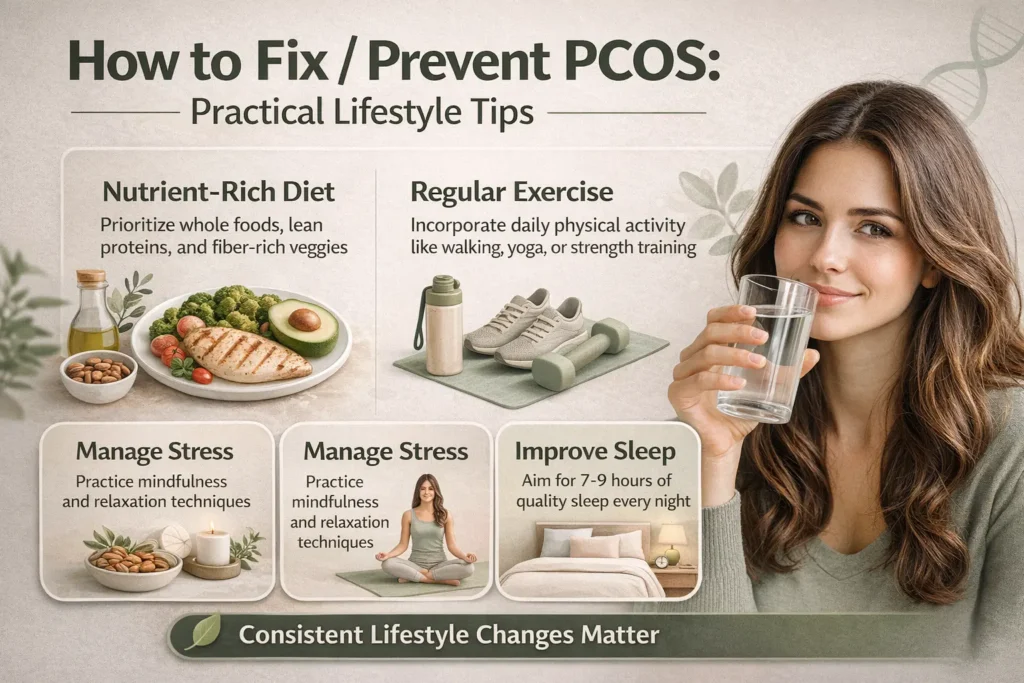
Although no cure exists for PCOS, many women experience improvements in symptoms and overall health when they focus on sustainable lifestyle strategies. In my practice, these steps often help build resilience and manage symptoms:
Balanced Nutrition
- Include whole foods such as vegetables, legumes, lean proteins, and whole grains.
- Reduce highly processed foods and refined sugars to help support consistent blood sugar levels.
- Stay hydrated and consider working with a nutrition professional familiar with PCOS.
- Eat regular meals to maintain energy and metabolic balance.
Regular Physical Activity
- Movement such as walking, cycling, or yoga can often support insulin sensitivity.
- Strength training may help build muscle and improve metabolic health.
- Aim for consistency rather than intensity, with enjoyable activities you can sustain.
Stress Management
- Practices like meditation, deep breathing, and mindful rest may support hormonal balance.
- Prioritizing sleep quality can positively influence mood and metabolic function.
Healthy Weight Goals
When appropriate, modest weight improvements often help regulate cycles and insulin sensitivity — but weight alone is not the only focus. A compassionate, holistic approach often works best.
Community and Support
Sharing experiences with support groups or counseling can bolster emotional resilience and help women navigate PCOS with confidence.
What Medical Options Are Available Worldwide for Its Treatment
In medical practice globally, options beyond lifestyle support often focus on symptom management and reproductive goals rather than “curing” PCOS. Common approaches may include:
- Hormonal support to regulate menstrual cycles in consultation with specialists.
- Fertility‑focused interventions when pregnancy is desired.
- Insulin‑sensitizing strategies under medical oversight.
- Supportive dermatological care for acne and hair concerns.
- Metabolic monitoring for heart and metabolic risks.
The choice of medical support is individual and based on shared decision‑making between you and your clinician. It is important to work with a trusted provider who knows your personal goals and overall health needs.
FAQs About PCOS
Q: Can PCOS be fully cured?
In my view and current evidence, PCOS does not have a cure, but many women manage symptoms effectively through lifestyle and tailored medical support.
Q: Does PCOS affect fertility?
Yes, PCOS often impacts ovulation and can make conceiving more difficult, but many women with PCOS do become pregnant with supportive care. Read more
Q: Is PCOS only about ovarian cysts?
No — while cyst‑like follicles are common, PCOS involves hormonal and metabolic features that vary from person to person.
Q: Can diet changes make a difference?
Yes — balanced nutrition may often support hormonal and metabolic health, which can help with symptom management.
Q: Is PCOS hereditary?
Genetics appear to contribute to PCOS risk, but lifestyle and environment also influence whether symptoms develop.
In closing my guide, I want you to know that PCOS is a journey many women navigate successfully. With accurate information, supportive care, and practical habits, it is often possible to live well and confidently with PCOS.
Referance Link
1. CDC
Link: https://www.cdc.gov/diabetes/basics/pcos.htm
2. NHS
https://www.nhs.uk/conditions/polycystic-ovary-syndrome-pcos/
3. WHO
https://www.who.int/news-room/fact-sheets/detail/polycystic-ovary-syndrome