Symptoms of PCOS in teenage girl explained in simple language. Learn 7 early warning signs, causes, and what parents should not ignore.
Have you ever noticed a teenage girl in your family struggling with irregular periods, sudden acne, or unexplained weight gain? These changes are often considered normal during adolescence, but sometimes they may indicate something deeper. One of the commonly overlooked conditions is PCOS.
In my analysis, Symptoms of PCOS in Teenage Girl can appear subtly and are often ignored as “just hormonal changes.” However, early awareness may help in understanding the body better and supporting long-term health. PCOS may affect hormonal balance, menstrual cycles, and even emotional well-being.
I have observed that many parents do not recognize these early signs, which may delay proper attention. Understanding these symptoms early may make a meaningful difference in managing overall health.
Key Takeaways
- Symptoms of PCOS in teenage girl may appear gradually and are often ignored
- Irregular periods and acne are among the most common early signs
- Hormonal imbalance may affect both physical and emotional health
- Early awareness may support better long-term health outcomes
- PCOS does not always lead to serious problems but may need attention
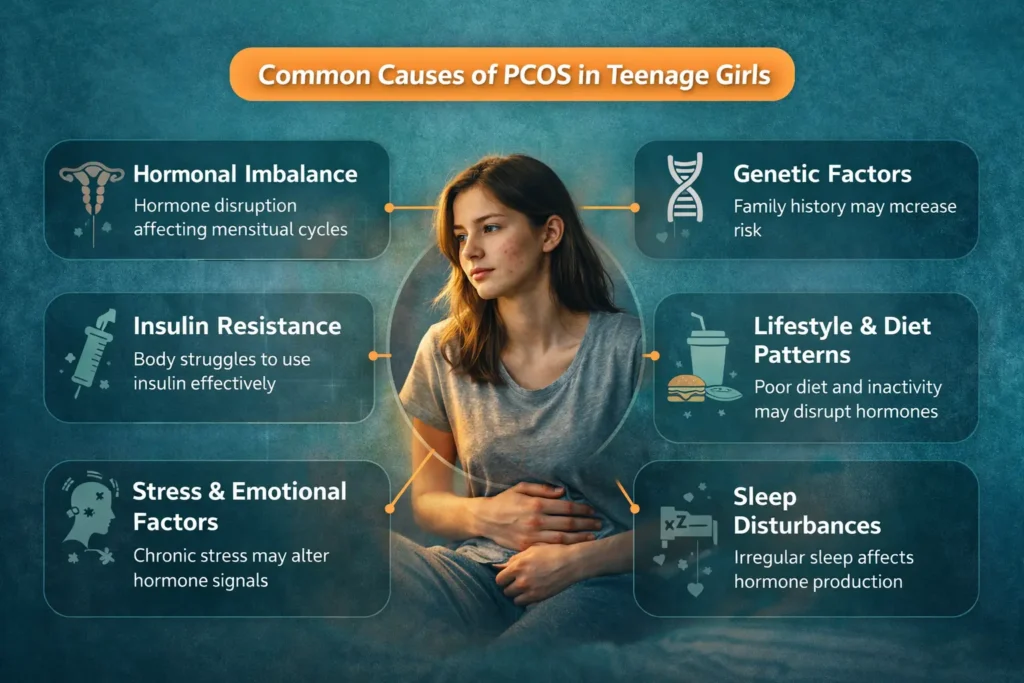
Common Causes of PCOS in Teenage Girls
Hormonal Imbalance
In my analysis, PCOS is mainly associated with hormonal imbalance. The body may produce higher levels of certain hormones, which can disturb the normal menstrual cycle. This imbalance may affect ovulation and lead to irregular periods. Over time, it may also influence skin, hair growth, and metabolism. Hormonal shifts during teenage years may further complicate this balance.
Insulin Resistance
I have observed that many teenage girls with PCOS may have insulin resistance. This means the body may not respond effectively to insulin, leading to increased blood sugar levels. This condition is often associated with weight gain and may further disrupt hormonal balance. It can also contribute to increased androgen levels, which may worsen symptoms like acne and hair growth.
Can You Get Pregnant Naturally If You Have PCOS? 7 Effective Tips (2026 Doctor Explained Guide)
Genetic Factors
Family history may play an important role in PCOS. If a close family member has similar hormonal issues, the chances may increase. In my experience, genetics does not guarantee the condition but may influence how the body responds to hormonal changes. Awareness of family history may help in early identification.
Lifestyle and Diet Patterns
Irregular eating habits, processed foods, and lack of physical activity may affect hormone regulation. I have observed that sedentary lifestyle patterns may worsen PCOS symptoms. Poor diet may also contribute to weight gain and insulin imbalance, which may indirectly affect reproductive health.
Stress and Emotional Factors
Chronic stress may influence hormonal signals in the body. In my analysis, stress hormones may interfere with reproductive hormones, leading to irregular cycles. Teenagers often experience academic and social stress, which may impact overall hormonal balance.
Sleep Disturbances
Poor sleep patterns may disrupt the body’s internal clock. I have observed that irregular sleep schedules may affect hormone production. Over time, this may contribute to fatigue, weight changes, and irregular menstrual cycles.
Medical Causes of Symptoms of PCOS in Teenage Girl
Irregular Menstrual Cycles
One of the most common symptoms is irregular periods. A teenage girl may skip months or experience unpredictable cycles. In my experience, this is often the earliest sign that parents ignore. It may indicate that ovulation is not happening regularly.
Persistent Acne
Acne during teenage years is common, but severe or persistent acne may be linked to hormonal imbalance. I have observed that acne along the jawline or chin may be associated with PCOS. It may not respond easily to general skincare routines.
Excess Hair Growth
Some girls may notice unwanted hair growth on the face, chest, or abdomen. This is often associated with increased androgen levels. In my analysis, this symptom may affect confidence and emotional well-being.
Weight Gain or Difficulty Losing Weight
Unexplained weight gain is another common symptom. Even with normal eating habits, some teenagers may gain weight easily. This may be linked to insulin resistance and hormonal imbalance.
Hair Thinning
Hair thinning or hair fall may occur in some individuals. I have observed that hair may become less dense over time. This symptom may be subtle but important to notice.
Dark Skin Patches
Darkening of skin around the neck or underarms may be associated with insulin resistance. In my experience, this sign is often ignored but may indicate underlying metabolic changes.
Mood Changes
Hormonal imbalance may also affect mood. Teenagers may experience mood swings, anxiety, or low motivation. This may not always be recognized as a physical health issue.
When to Worry
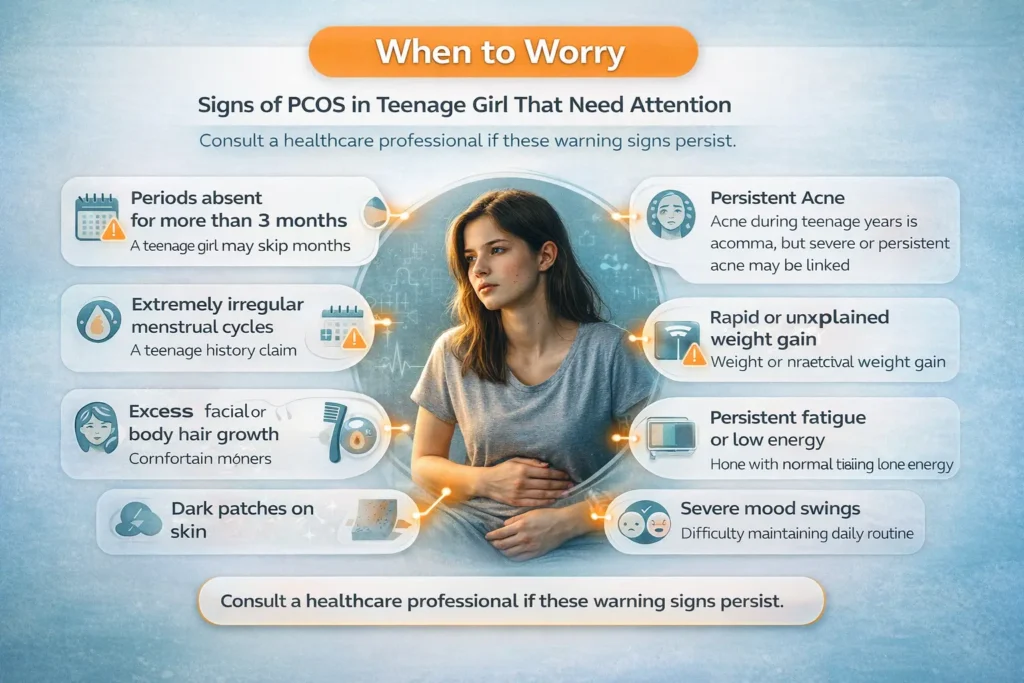
In my experience, occasional changes are common, but the following signs may need attention:
- Periods absent for more than 3 months
- Extremely irregular menstrual cycles
- Severe acne that does not improve
- Rapid or unexplained weight gain
- Excess facial or body hair growth
- Persistent fatigue or low energy
- Dark patches on skin
- Hair thinning or excessive hair fall
- Severe mood swings
- Difficulty maintaining daily routine
If these symptoms persist, it may be helpful to consult a healthcare professional for proper evaluation.
Why Do You Feel Sleepy All Day? 6 Simple Reasons & Effective Fixes
How to Fix / Prevention
Maintain a Healthy Lifestyle
In my analysis, balanced daily habits may support hormone regulation. Simple routines may help improve overall well-being.
Balanced Diet
A nutrient-rich diet may support metabolism and hormonal balance. I have observed that whole foods, fruits, vegetables, and protein may be beneficial.
Regular Physical Activity
Movement may improve energy levels and insulin sensitivity. Even simple activities like walking or light exercise may help.
Proper Sleep Routine
Consistent sleep patterns may regulate the body’s internal clock. Good sleep may support hormone function.
Stress Management
Relaxation techniques such as deep breathing or mindfulness may help reduce stress levels.
Consistency
In my experience, small daily habits practiced consistently may lead to gradual improvement over time.
What Medical Options Are Available Worldwide
Globally, different approaches may be used to manage PCOS depending on symptoms and individual needs. These may include:
- Lifestyle-based management
- Hormonal evaluation and monitoring
- Supportive therapies for symptom control
- Guidance from healthcare professionals
According to the World Health Organization, PCOS affects approximately 8–13% of women of reproductive age worldwide. It is also estimated that up to 70% of cases remain undiagnosed, which highlights the importance of early awareness.
FAQ (Most Searched Questions)
1. What are the early symptoms of PCOS in teenage girl?
Early symptoms may include irregular periods, acne, weight changes, and excess hair growth.
2. Is PCOS common in teenage girls?
Yes, PCOS is relatively common and may begin during adolescence due to hormonal changes.
3. Can PCOS symptoms go away naturally?
In my analysis, symptoms may improve over time with healthy lifestyle habits, but they may not completely disappear.
4. Does PCOS affect future fertility?
PCOS may affect ovulation, but many individuals may still have the possibility of pregnancy over time.
5. When should parents take symptoms seriously?
If symptoms persist for several months or affect daily life, it may be important to seek medical advice.
Final Read
In my experience, Symptoms of PCOS in Teenage Girl are often subtle and easily ignored. However, early awareness may help in understanding the body better and supporting long-term health. PCOS is not always a serious condition, but it may require attention and consistent care.
Recognizing these signs early, maintaining healthy habits, and seeking guidance when needed may make a meaningful difference in overall well-being.
This article is for educational purposes only and does not replace professional medical advice.
Reference link
🔗 1. WHO (World Health Organization)
Link:
https://www.who.int/news-room/fact-sheets/detail/polycystic-ovary-syndrome
Reference Content (add below or mention in article):
According to the World Health Organization, PCOS affects approximately 8–13% of women of reproductive age, and up to 70% of cases remain undiagnosed worldwide.
🔗 2. NHS (UK National Health Service)
The NHS explains that symptoms of PCOS may begin during teenage years and often include irregular periods and acne.
Link:
https://www.nhs.uk/conditions/polycystic-ovary-syndrome-pcos/
Reference Content:
The National Health Service states that PCOS symptoms can vary but often include irregular menstrual cycles, excess hair growth, acne, and weight changes.
🔗 3. CDC (Centers for Disease Control and Prevention)
The CDC highlights that PCOS is associated with hormonal imbalance and metabolic changes.
Link:
https://www.cdc.gov/diabetes/basics/pcos.html
Reference Content:
According to the Centers for Disease Control and Prevention, PCOS is linked with insulin resistance and may affect long-term metabolic health.