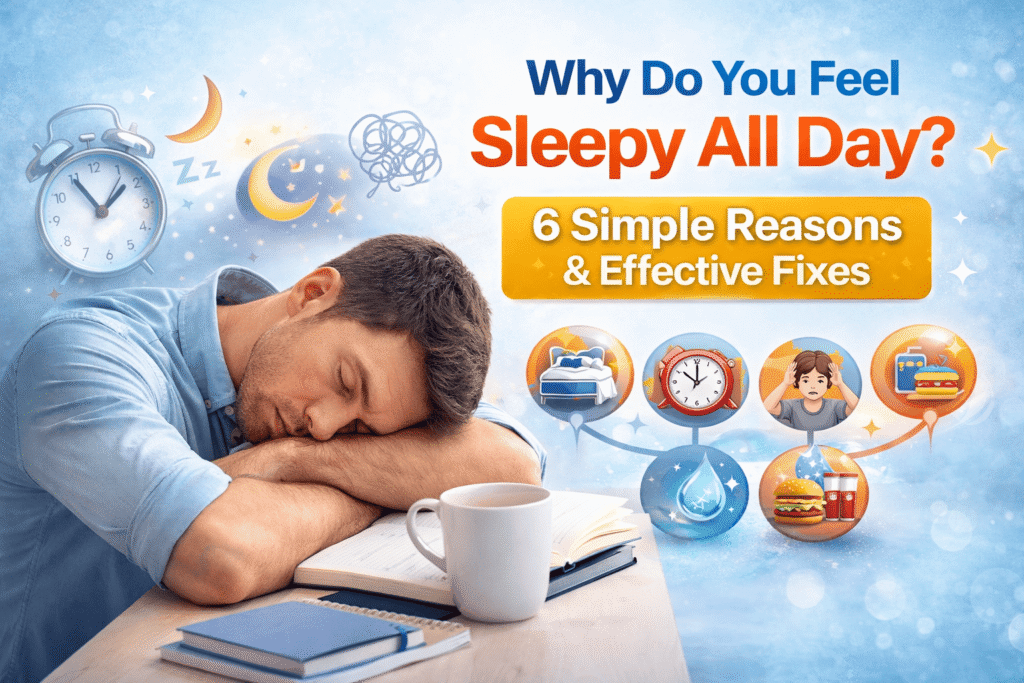
Have you ever noticed that even after a full night of sleep, you still feel tired and sleepy throughout the day? You wake up, start your routine, but within a few hours, your energy drops. You may find it difficult to concentrate, feel low on motivation, or even struggle to stay awake during simple tasks.
Many people ask, why do you feel sleepy all day, even when they believe they are getting enough rest. This is a very common concern and can happen for several reasons related to your daily habits, body rhythm, and overall health.
Understanding why do you feel sleepy all day can help you recognize what your body may be trying to tell you. In this article, we will explore simple explanations, possible causes, and safe ways to manage this feeling in a practical and easy-to-understand way.
What Is Happening Inside the Body?
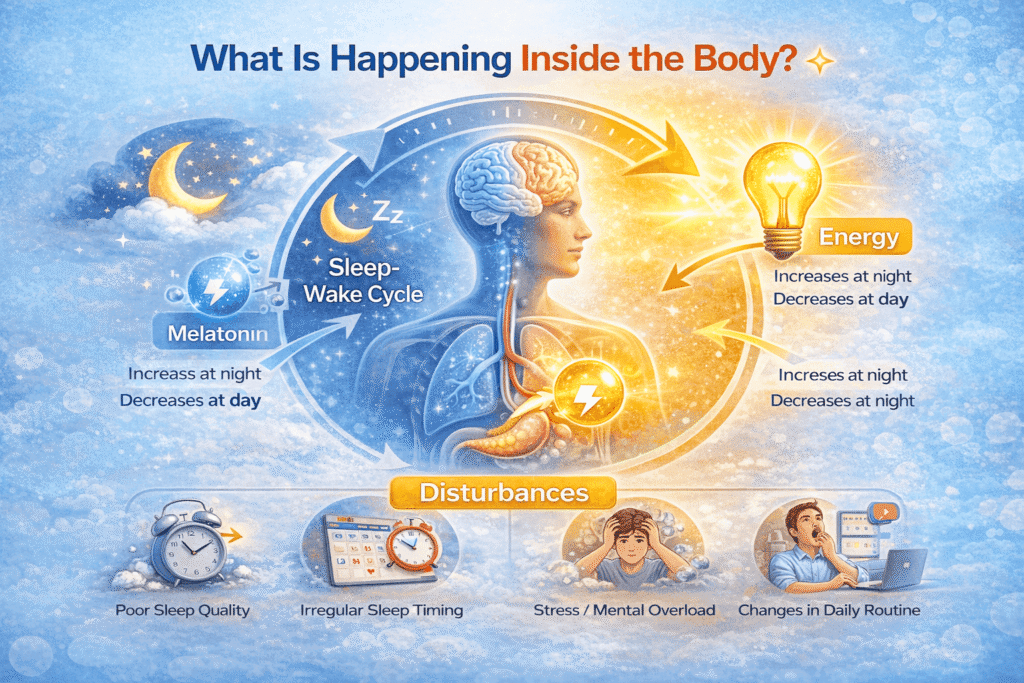
To understand why do you feel sleepy all day, it is helpful to know how the body controls sleep and wakefulness.
Your body follows a natural internal clock, often called the sleep-wake cycle. This cycle is influenced by light, darkness, and daily habits. A hormone called melatonin helps regulate sleep. It increases at night to help you sleep and decreases during the day to keep you awake.
At the same time, your body also uses energy from food and oxygen to keep your brain active. When this balance is disturbed, you may feel sleepy during the day.
Several factors can affect this system:
- Poor sleep quality
- Irregular sleep timing
- Stress or mental overload
- Changes in daily routine
When these factors interfere with your natural rhythm, the body may not feel fully refreshed, even after sleep. This can lead to daytime sleepiness.
Why Do You Feel Sleepy All Day? 6 Simple Reasons
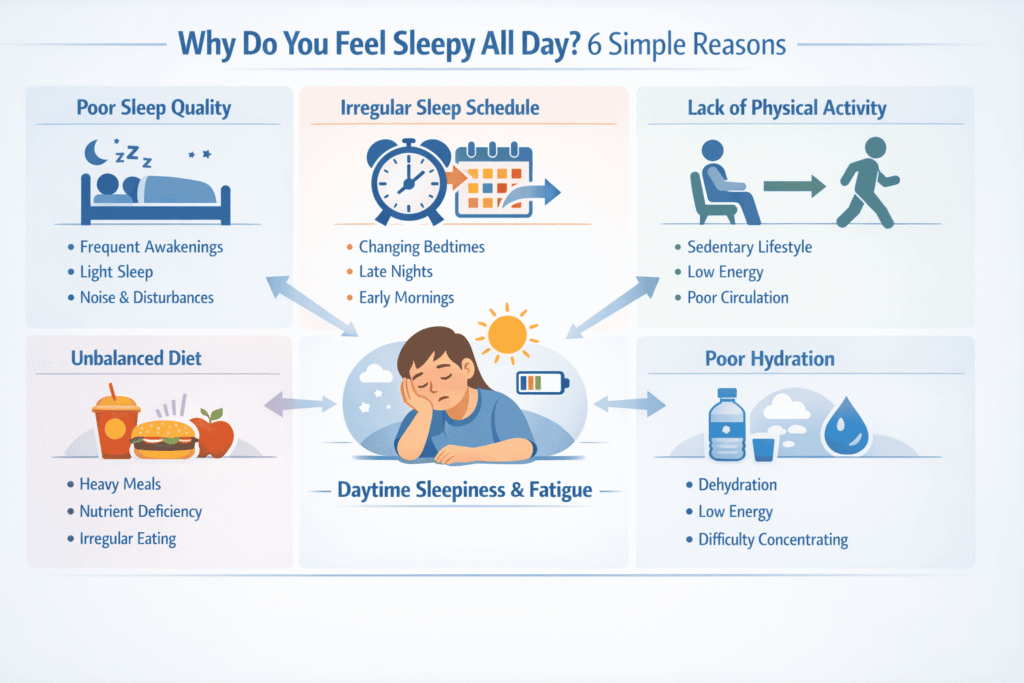
1. Poor Sleep Quality
Even if you spend enough hours in bed, the quality of sleep matters more than the duration.
You may feel sleepy all day if:
- You wake up frequently at night
- Your sleep is light and not deep
- There is noise or disturbance during sleep
When the body does not get deep, restorative sleep, it may not fully recover, leading to tiredness the next day.
2. Irregular Sleep Schedule
Sleeping and waking up at different times every day can confuse your internal clock.
For example:
- Sleeping late on some days
- Waking up early on others
- Frequent changes in routine
This irregularity may disturb your sleep cycle, making you feel sleepy during the day.
3. Lack of Physical Activity
A sedentary lifestyle can also explain why do you feel sleepy all day.
When the body does not move enough:
- Blood circulation may slow down
- Energy levels may drop
- The brain may feel less alert
Regular movement helps the body stay active and supports better sleep at night.
4. Unbalanced Diet and Eating Habits
Food plays an important role in maintaining energy levels.
You may feel sleepy if:
- You eat heavy meals frequently
- Your meals lack essential nutrients
- You skip meals and then overeat
After eating, especially large meals, the body directs energy toward digestion. This can make you feel sleepy.
5. Stress and Mental Fatigue
Mental stress can be exhausting, even if the body is not physically active.
You may notice:
- Difficulty focusing
- Feeling mentally drained
- Lack of motivation
This mental fatigue can make you feel sleepy, even if you are not physically tired.
6. Poor Hydration
Not drinking enough water can affect how your body functions.
Mild dehydration may lead to:
- Fatigue
- Reduced concentration
- Low energy
Sometimes, the feeling of sleepiness is actually a sign that your body needs better hydration.
When It Is Usually Harmless
In many cases, feeling sleepy during the day is not serious and may be related to lifestyle habits.
It is usually harmless when:
- It happens occasionally
- It improves after proper rest
- It is linked to a busy or stressful day
- It gets better after improving sleep routine
Simple changes in daily habits can often help improve energy levels.
Warning Signs – When Medical Attention May Be Needed
While occasional sleepiness is common, certain signs may need attention.
Consider seeking medical advice if:
- Sleepiness continues for several weeks
- You feel extremely tired despite adequate sleep
- You fall asleep suddenly during daily activities
- You have difficulty concentrating consistently
- You experience frequent headaches or mood changes
These symptoms may be associated with underlying conditions that need proper evaluation.
What Happens If You Stop Sugar? (5 Shocking Truths)
Prevention and Healthy Habits
If you are wondering why do you feel sleepy all day, improving daily habits can often help.
Maintain a Regular Sleep Schedule
Try to sleep and wake up at the same time every day. This helps your body maintain a stable rhythm.
Create a Good Sleep Environment
- Keep your room quiet and comfortable
- Reduce screen exposure before sleep
- Avoid bright lights at night
Stay Physically Active
Simple activities like walking or light exercise can help improve energy levels and sleep quality.
Eat Balanced Meals
- Include fruits, vegetables, and whole foods
- Avoid very heavy meals before sleep
- Maintain regular meal timings
Stay Hydrated
Drink enough water throughout the day to support body functions.
Manage Stress
Practices like relaxation, deep breathing, or spending time in calm activities may help reduce mental fatigue.
FAQs
1. Why do you feel sleepy all day even after sleeping?
This may happen due to poor sleep quality, stress, or irregular sleep patterns. Even if the duration is enough, the body may not feel fully rested.
2. Is feeling sleepy during the day normal?
Occasional sleepiness can be normal, especially after a busy day or poor sleep. However, frequent or persistent sleepiness may need attention.
3. Can diet affect daytime sleepiness?
Yes, eating patterns and food choices can influence energy levels. Heavy or unbalanced meals may lead to sleepiness.
4. How can I feel more energetic during the day?
Maintaining good sleep habits, staying active, eating balanced meals, and managing stress may help improve energy levels.
Final Read
Understanding why do you feel sleepy all day is important for maintaining overall well-being. In many cases, it is related to simple lifestyle factors such as sleep habits, diet, activity level, and stress.
By making small and consistent changes, you may notice improvements in your energy and alertness. However, if the problem continues, it is always better to seek proper guidance.
This article is for educational purposes only and does not replace professional medical advice.
REFERENCE SITES
- Centers for Disease Control and Prevention (CDC)
Use for: sleep health, fatigue, lifestyle factors
🔗 https://www.cdc.gov/sleep/about_sleep/index.html�
According to the CDC, good sleep habits are important for maintaining energy levels. - National Health Service (NHS)
Use for: tiredness, causes of fatigue
🔗 https://www.nhs.uk/conditions/tiredness-and-fatigue/�
The NHS explains that tiredness can be linked to lifestyle and daily routine. - Mayo Clinic
Use for: symptoms, sleep disorders
🔗 https://www.mayoclinic.org/symptoms/fatigue/sym-20050894�
Mayo Clinic states that fatigue is often associated with sleep and stress factors. - National Institute of Neurological Disorders and Stroke
Use for: sleep-wake cycle explanation
🔗 https://www.ninds.nih.gov/health-information/public-education/brain-basics/brain-basics-sleep�
the sleep-wake cycle is controlled by the brain, as explained by NINDS. - Harvard Medical School
Use for: circadian rhythm, energy
🔗 https://www.health.harvard.edu/staying-healthy/why-you-feel-tired�
Harvard Medical School highlights how daily habits affect energy levels.