Have you ever felt that your energy goes up and down throughout the day without any clear reason? One moment you feel active, and the next moment you feel tired or low. Many people experience this and often do not realize that sugar intake may play a role in these changes.
In today’s lifestyle, sugar is present in many common foods such as tea, packaged snacks, desserts, and drinks. Because of this, people often consume more sugar than they actually notice. This leads many to ask an important question: what happens if you stop sugar?
Understanding what happens if you stop sugar can help you make better decisions about your daily habits. This article explains the possible changes inside the body in a simple and clear way so that you can understand what may happen over time.
What Happens If You Stop Sugar Inside the Body?
When you consume sugar, your body breaks it down into glucose, which is a type of energy source. This glucose enters the bloodstream and causes a rise in blood sugar levels. In response, the body releases a hormone called insulin, which helps move glucose into cells.
If sugar is consumed frequently, this cycle happens again and again. Over time, the body may become less responsive to insulin. This condition is often referred to as reduced insulin sensitivity.
When you stop sugar or reduce it significantly, several changes may begin:
- Blood sugar levels may become more stable
- The body may rely more on stored energy
- Hormonal balance may improve gradually
- Sudden energy crashes may reduce
These changes do not happen instantly. The body often takes time to adjust, especially if sugar intake was high earlier.
5 Shocking Truths About What Happens If You Stop Sugar
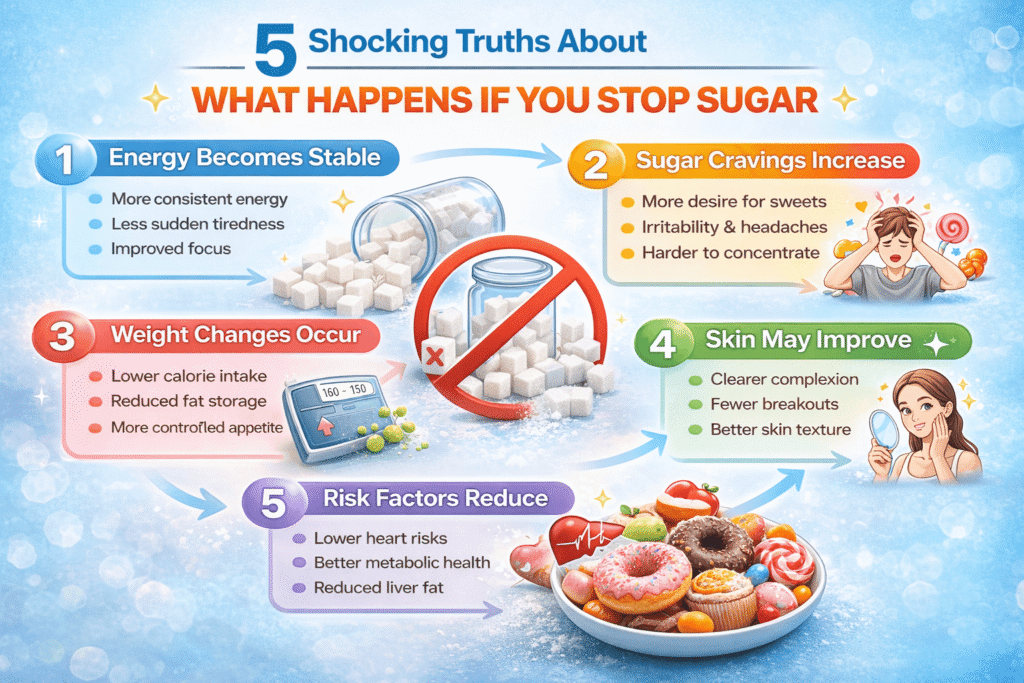
1. Your Energy Levels May Become More Stable
Many people notice that their energy fluctuates throughout the day. This is often linked to rapid rises and falls in blood sugar levels.
When you stop sugar:
- Energy may feel more consistent
- Sudden tiredness may reduce
- Focus may improve over time
This happens because the body is no longer dealing with frequent spikes and drops in blood sugar.
2. Sugar Cravings May Increase Initially
In the early days, stopping sugar may not feel easy. The body is used to regular sugar intake, and removing it suddenly can lead to cravings.
Common experiences include:
- Desire to eat sweets
- Irritability
- Mild headaches
- Difficulty concentrating
These symptoms are usually temporary and may improve within a few days to weeks as the body adapts.
3. Weight Changes May Occur
Sugar often adds extra calories without providing essential nutrients. When sugar intake is reduced:
- Calorie intake may decrease
- Fat storage may reduce over time
- Appetite may become more controlled
However, weight changes depend on overall diet, activity level, and lifestyle. It is not only about sugar alone.
4. Skin May Improve
High sugar intake is associated with inflammation in the body. This may affect the skin in some individuals.
When you stop sugar:
- Skin may appear clearer
- Breakouts may reduce in some people
- Skin texture may improve
These effects vary from person to person and depend on multiple factors such as hydration, sleep, and overall nutrition.
5. Risk Factors for Certain Health Conditions May Reduce
Excess sugar intake is often linked with conditions such as:
- Increased body weight
- Insulin resistance
- Fat accumulation in the liver
- Heart-related concerns
When you reduce or stop sugar:
- These risks may gradually decrease
- Metabolic health may improve over time
This does not mean that stopping sugar guarantees prevention, but it may contribute to better overall health.
Common Reasons Why People Consume Excess Sugar
Understanding the causes can help explain why reducing sugar can be challenging.
- Habitual consumption from childhood
- Frequent intake of processed foods
- Emotional eating during stress
- Lack of awareness about hidden sugars
- Easy availability of sugary drinks and snacks
Many foods contain hidden sugar, including sauces, packaged juices, and flavored yogurt.
When It Is Usually Harmless
For most people, moderate sugar intake does not cause immediate harm. Occasional consumption of sweets:
- May not significantly affect health
- Is generally tolerated by the body
- Can be part of a balanced lifestyle
The concern usually arises when sugar is consumed in excess over a long period.
Stopping sugar completely is not always necessary for everyone. Reducing added sugar and maintaining balance is often a practical approach.
Warning Signs – When Medical Attention May Be Needed
While reducing sugar is generally safe, certain symptoms may need attention if they are severe or persistent:
- Continuous fatigue despite good sleep
- Frequent dizziness
- Unexplained weight loss
- Persistent mood changes
- Difficulty concentrating for long periods
These symptoms may not always be related to sugar and can have other causes. It is important to seek professional evaluation if such symptoms continue.
Prevention and Healthy Habits
If you are thinking about what happens if you stop sugar, it is also important to understand how to do it in a balanced way.
Feel Sleepy After Having Lunch? Here’s What Your Body Might Be Telling You
Gradual Reduction
Instead of stopping sugar suddenly, reducing it slowly may help the body adjFeel Sleepy After Having Lunch? Here’s What Your Body Might Be Telling Youust better.
Choose Natural Foods
Fruits, whole grains, and natural foods provide energy along with nutrients.
Stay Hydrated
Drinking enough water supports overall body function and may reduce cravings.
Maintain Regular Meals
Skipping meals may increase the desire for sugary foods later.
Sleep and Stress Management
Lack of sleep and stress may increase sugar cravings. Managing these factors can help.
FAQs
1. What happens if you stop sugar suddenly?
When you stop sugar suddenly, you may experience cravings, low energy, or irritability in the beginning. These effects are usually temporary as the body adjusts.
2. How long does it take to see changes after stopping sugar?
Some people notice changes within a few days, while others may take a few weeks. The timeline varies depending on previous sugar intake and overall health.
3. Is it necessary to completely stop sugar?
It is not always necessary to completely stop sugar. Reducing added sugar and maintaining balance is often sufficient for many people.
4. Can stopping sugar improve mood?
In some cases, stable blood sugar levels may help improve mood. However, mood is influenced by many factors such as sleep, stress, and overall lifestyle.
Conclusion
Understanding what happens if you stop sugar can help you make informed choices about your health. Reducing sugar intake may lead to more stable energy, better metabolic balance, and overall improvement in well-being.
However, changes vary from person to person. A balanced approach that includes healthy eating, regular activity, and proper rest is often more sustainable.
Small, consistent changes may have a meaningful impact over time.
This article is for educational purposes only and does not replace professional medical advice.